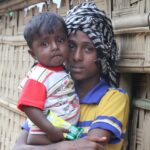
New arrival refugees in Australia face second trauma
Newly arrived refugees have been denied full welfare assistance by Centrelink - despite government legislative programs which outline assistance for refugees (under Social Security Act 1991, Activity Test Exemption - Special Circumstances for being refugees).
General/Refugees
By Sai Awn Tai
5 December 2008
Burmese refugees who have spent more
than ten years in isolated refugee camps on the Thai-Burma border come to
Australia on Offshore Refugee and Humanitarian visas (subclass 200-219). These
visas give them permanent residency and mean they should be able to access
government settlement programs and have a Qualifying Residence Exemption
(QRE).
According to Australian Immigration, in 2007-08, Australia
granted 2,961 humanitarian visas to Burmese refugees. It is expected Burmese
will continue to be one of the largest groups of entrants under Australia’s
humanitarian program for 2008-09.
They have been settled across
Australia but the main concentrations are in two major cities - Sydney and
Melbourne. Many refugees from Burma have suffered trauma and face language
barriers and cultural and societal displacement.
On arriving in
Australia, humanitarian refugees are normally given a period of time to study
English full-time, and to adjust to the demands of a very different culture.
However, it has been reported that some of these refugees are facing
pressures that go against these rights. Under humanitarian visas, there is no
requirement for them to sign up immediately to look for jobs to entitle them to
welfare payments.
However, the paper reports that the Government agency
Centrelink has forced some refugees to sign up to the “Job Network”, which means
they must then apply for a certain number of jobs each week (the “activity
test”) to maintain welfare benefits. This is contrary to Social Security Law
under the “Activity Test Exemption - Special Circumstances” obligations which
was released on 3 November this year. This states:
“a refugee is
granted automatic exemption (from the “Job Network” demands) for up to 13
weeks after arriving in Australia. This exemption cannot be extended, except
where the person is undertaking the Special Preparatory Program (SPP) part of
the Adult Migrant English Program (AMEP)”.
It means that there
should not be any pressure for new arrival refugees within their first 13 weeks
in Australia whether they are studying or not. They are entitled to receive
welfare payments without any demands to undertake the normal job-seeking
activities. For people who have made the massive cultural leap from a refugee
camp in the jungles of Asia to the streets of a city in a developed country this
period of adjustment is very necessary.
However, some new arrival
refugees have complained that they have had to join Job Network almost as soon
as they arrived in Australia.
Than Aung, a holder of visa subclass 200
who is entitled to the Activity Test Exemption, had to join Job Network when he
arrived in Australia in November 2006.
He came from a background of
ethnic Karen, and had spent nearly ten years in Mae La refugee camp on the
Thai-Burma border.
He joined the Adult English Migrant Program (AEMP),
510 hours of English study, within one week of arriving in Coffs Harbour.
Despite the fact that this meant he was studying fulltime, Centrelink and the
“Job Network” required him to apply for five to ten jobs regularly to claim his
benefits.
There seems to be some confusion about what is required of new
refugees in the government agency Centrelink.
Paul Creedon, the
Centrelink NSW Media Adviser said, “Refugees can do full time studies such as
Adult Migrant English Program (AMEP). However if the course is more than one
year the person may need to claim Youth Allowance or Austudy. Centrelink will
discuss these and any other options with the customer before any changes to
payments are made”.
Creedon also said that, “in most instances, refugees
usually do AMEP which is 510 hrs. Newstart Allowance customers & Youth
Allowance need to be registered with the Job Network even if they are studying
full time”.
However at the Parramatta Job Network a spokesperson
claimed that Job Network does not accept students that study more than 15 hours
a week or more. Only those who study part time are unemployed and job seekers
are eligible to join Job Network.
Newstart Allowance recipients are
required to focus on job search only if they are not participating in a
full-time activity such as a course of education or training.
Social
security law allows those on a Newstart allowance to take a full-time course
particularly if they are unlikely to find work with their existing skills. They
are often referred to courses with a vocational focus that will enhance their
immediate employability. While they are doing this they don’t need to also be
seeking work.
Refugees also complained that they were asked to sign
agreements that they did not really understand. They also often face problems of
understanding other issues because there is no interpreter available for them
while meeting the Centrelink’s staff.
Centrelink is aware of the need
for interpreter services. Paul Creedon, the Centrelink spokesperson said,
“Centrelink's Refugee Servicing Unit can and does provide interpreter services
to all refugees. We are particularly cautious in not using relatives to
interpret, but trained professionals interpret. In some cases we use over the
phone interpreting if a suitable interpreter isn't available in person, but
access to an interpreter service is always available”.
However, it seems
that the problem is that Centrelink’s Refugee Servicing Unit is available only
at Fairfield. Most refugees live in different suburbs in Western Sydney areas.
Nang Win is a Burmese refugee who lives in Auburn and she usually goes
to the Centrelink office there. “I was often told that there was no interpreter
available when I asked,” Nang Win said in Burmese.
Last month
Centrelink’s officers came to Auburn Migrant Training Centre (MTC) to explain
Centrelink policy to migrant students. “I ask them why Centrelink’s staff always
say there is no interpreter available for me. But the officers say sorry on
behalf of their staff and give a card to me,” Win said.
Win was given a
card which she can access interpreter on phone. But she said Centrelink staffs
do not arrange any telephone interpreter for her whenever she goes there.
Gerard Thomas, the Media and Policy Officer of Welfare Rights said,
“Our organization has long standing our concern around government policies as
they relate to new arrivals and refugees. But Centrelink does not make up this
policy, it only implements the directives of the government. So often Centrelink
is not to blame for what many of us consider poor treatment of refugees. But
many policies can be quite harmful to people who are undergoing a great deal
with stress”.
NSW Service for the Treatment and Rehabilitation of
Torture and Trauma Survivors (STARTTS) is helping refugees recover from their
experiences and build a new life in Australia.
“Quite a lot of Burmese
refugees come to see the STARTTS for counselling with their difficulties. Most
of their problems relate to Centrelink. Some of them were referred to the
General Support Program by Centrelink and also they are in counselling section
of Early Intervenion Program (EIP)” said Danial Zu of the General Service of
STARTTS.
There is an issue of understanding the problem of refugees and
their home country background, such as torture and other trauma. Most Burmese
refugees have experienced civil conflicts, war and have spent more than a decade
in isolated refugee camps.
Neng Boi, a Burmese refugee of Kuki ethnic
background who arrived in Melbourne about six months ago said, “Some Centrelink
staff understand our problem but some don’t. They just pressure us to do things
without checking our files properly”.
One Centrelink staff member
pressured Neng Boi to do a job search and told her that she is not allowed to
study, while another staff member on another day said she can continue fulltime
study.
Referring to refugees’ complaints, Centrelink was asked whether
government policy on refugees had been changed recently and if it has impacted
on Centrelink’s management on its refugees clients.
Creedon responded:
“Let me say that there has been no change to the way Centrelink services its
refugee customers. We have a Refugee Servicing Unit based in Sydney. Staff in
the Refugee Servicing Unit are specialists in servicing refugees and
understanding their needs and issues”.
From the different stories from
Centrelink and refugees, it seems that there is a lack of understanding by
Centrelink staff about the rights of refugees, and the best practices to help
them – such as ensuring access to interpreter services.
However, an
investigation has revealed that Centrelink has mistreated some newly arrived
refugees by denying them part of Social Security entitlements.
In May
2008, the Government announced $49.2 million over four years for English
language training and traineeship for work readiness that will assist migrants
in finding sustainable employment.
“We urge the government to also
include in its radar young arrivals, in particular refugees and humanitarian
entrants who are at present falling through gaps between education and the
workplace,” said Voula Messimeri, the Chair of Federation of Ethnic Communities'
Council of Australia (FECCA).
More resources need to be directed
towards essential settlement services and exemptions for the most vulnerable
groups who have low literacy skills like refugees. “Clearly the humanitarian
program must equip migrants arriving under this scheme with the necessary
survival skills required for smooth resettlement,” she said.
Eariler
this year, the Refugee Council of Australia (RCOA) urged the Australian
government to do more for refugees by addressing the practical problems faced by
recently-arrived humanitarian entrants, especially in housing, language learning
and access to employment.
The impacts of government funding practices on
the refugee settlement services sector, particularly the competitive tendering
of the Integrated Humanitarian Settlement Strategy (IHSS) and the short-term
funding of the Settlement Grants Program (SGP).
The Council of Social
Service of NSW (NCOSS) has also been concerned that the recent NSW Government
mini budget which will affect the most vulnerable and disadvantaged people in
community.
A Burmese case worker at the Parramatta Migrant Resource
Centre said, there are some Burmese refugees who are homeless, and come to seek
help, but the lack of funding from government means they can do nothing for
them.
The writer is a student of
journalism in Australia – Editor